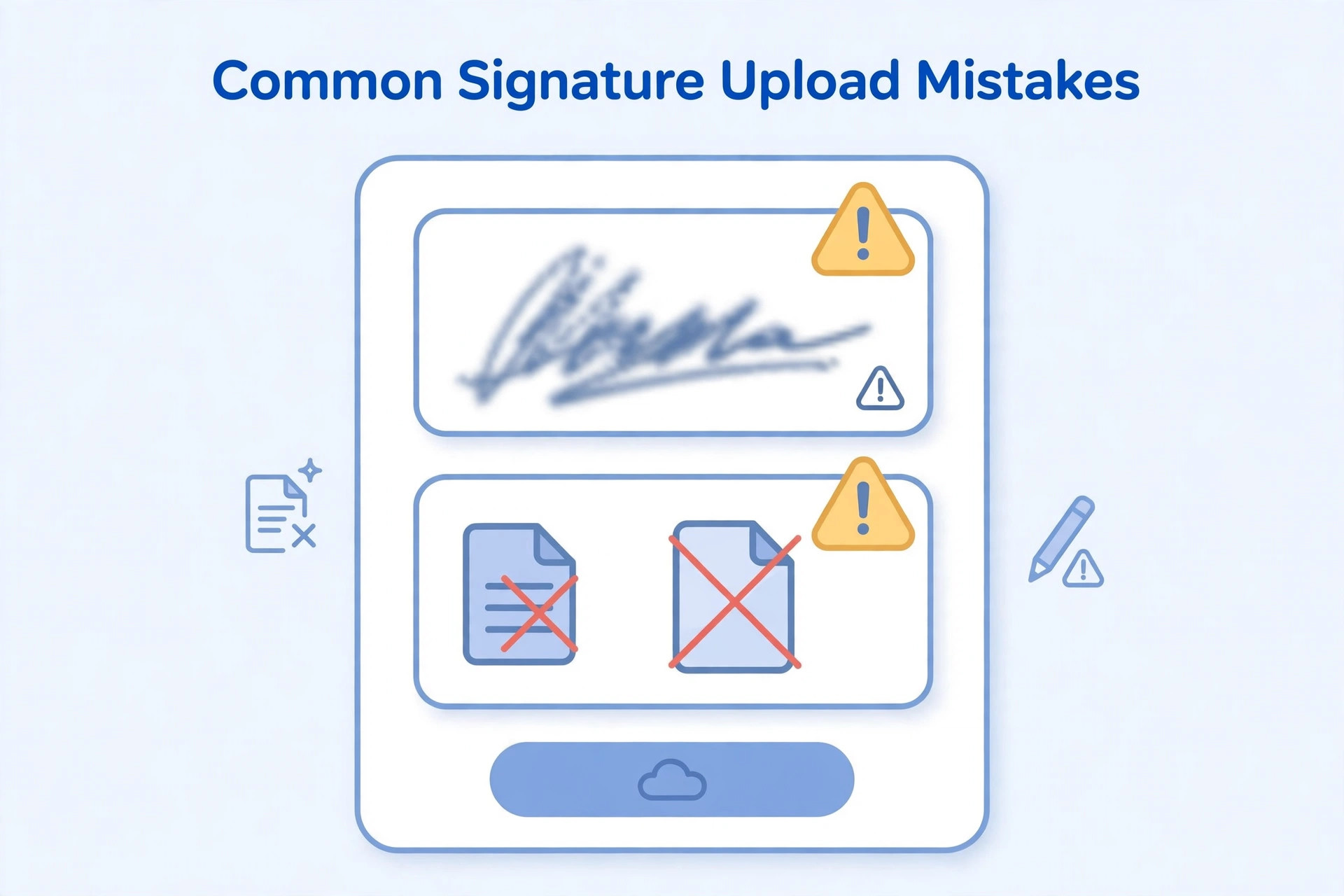
A signature upload may look like a small step in a government job application, but it deserves careful attention. The signature is part of the candidate's application record and may be used during later verification. A file can fail because of technical issues such as the wrong format or dimensions. It can also be difficult to verify if the handwriting is blurred, cropped or too faint.
Not every mistake leads to automatic rejection, and the outcome depends on the recruitment authority's rules. However, applicants can avoid many common problems by preparing the signature carefully and checking the final file before submission.
Mistake 1: Not reading the current instructions
One of the biggest errors is using requirements copied from another examination. Applicants may assume that all recruitment portals accept the same file size, dimensions and ink colour. In reality, the specifications can vary between authorities and recruitment cycles.
Always read the current notification and application help document. Note the required file format, size range, dimensions, paper type and ink colour if stated. A previous application's accepted signature is not proof that the same file will work again.
Mistake 2: Uploading a photograph of the whole sheet
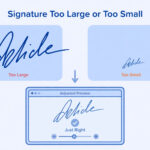
Some candidates take a picture of the entire paper and upload it without cropping. The signature then occupies only a small part of the image. The portal preview may show a large white area with tiny handwriting.
Crop the image carefully so that the signature is clearly visible with a small margin. Do not cut off any strokes. Use the sample image if the authority provides one.
Mistake 3: Cropping too tightly
The opposite problem is removing too much space. A tight crop may cut off the first or last letter, underline or flourish. It may also make the signature touch the image boundary, which can look untidy.
Leave a small, balanced margin around the complete handwriting. Zoom in before confirming the crop. If a stroke has been cut off, return to the original scan and crop again.
Mistake 4: Using faint or broken ink
A pen that skips or produces very light lines can make the signature difficult to read after scanning. The problem may become worse when the image is resized or compressed.
Use a pen that follows the ink-colour instruction and creates a consistent line. Test it on a separate sheet. If the final signature is faint, write a new one on clean paper rather than trying to redraw the strokes digitally.
Mistake 5: Choosing the wrong ink colour
Some recruitment notices specify black ink, blue ink or another instruction. Applicants sometimes ignore this because a general online guide recommends a different colour.
The current notification should decide. If the colour is not mentioned, check the official sample or help document. Do not treat an informal recommendation as a compulsory rule.
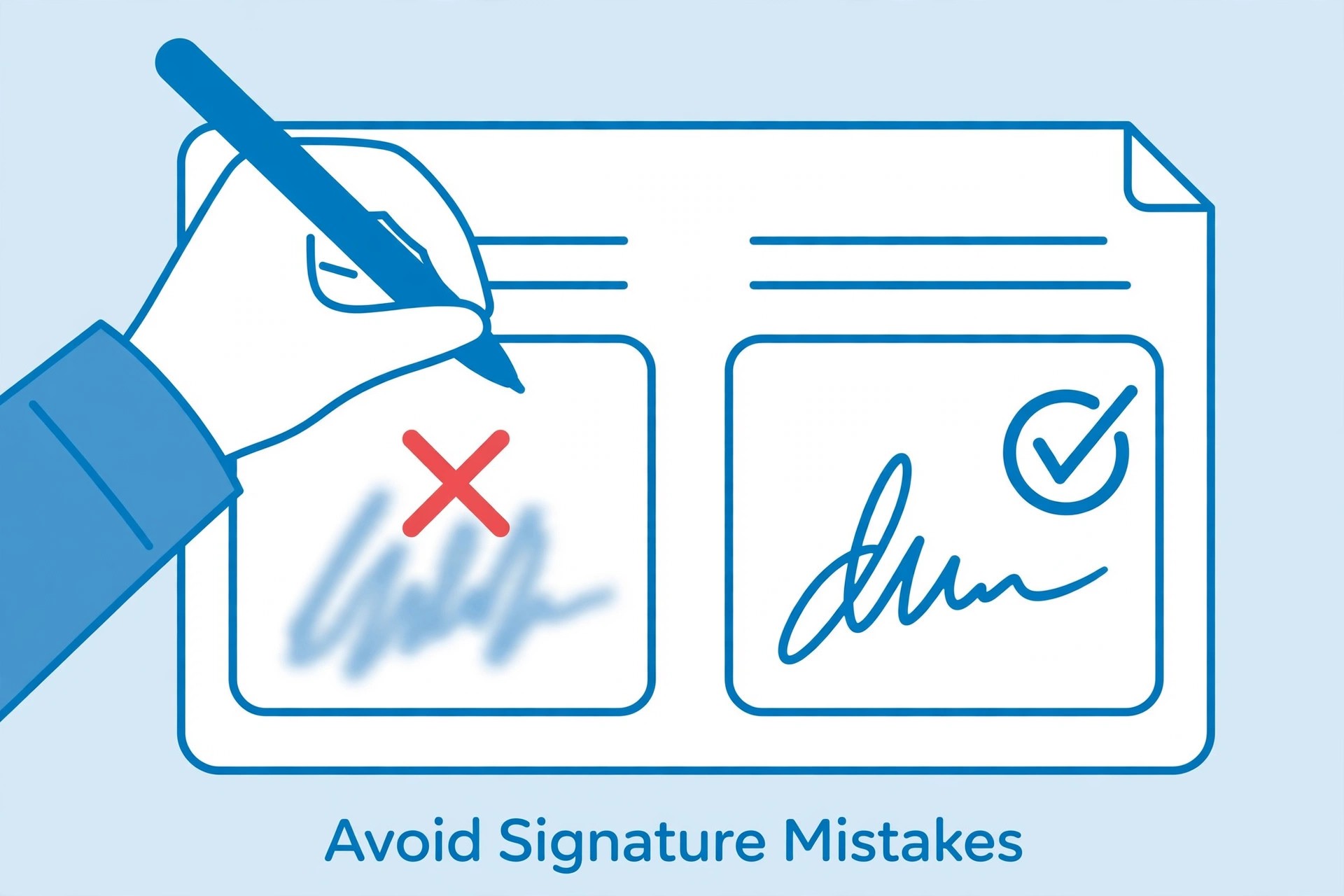
Mistake 6: Taking a blurred photograph
A phone photograph can become blurred when the camera moves or fails to focus. The paper may also be photographed at an angle, making the signature appear distorted.
Place the paper on a flat surface, use even light and hold the camera parallel to the page. Clean the camera lens and tap the signature area to focus. If the result is still soft, take another photograph.
Mistake 7: Using too much compression
A file may be reduced below the upload limit but lose important details. Thin strokes can become broken, and letters may look blocky.
Compress gradually and inspect the result. Keep the original scan. If the compressed version is unclear, export a new copy from the original at a higher quality.
Mistake 8: Stretching the signature
Entering width and height without maintaining the aspect ratio can make the handwriting look too wide or narrow. This changes the natural appearance of the signature.
Crop to the target shape first, then resize with proportions locked. If the required dimensions have a different shape, do not force the signature to fit by stretching it. Prepare a suitable new signature image if needed.
Mistake 9: Renaming the file extension
Changing a filename from .png to .jpg does not convert the image. The actual file may still be PNG, and the portal may reject it if it only accepts JPEG.
Use the export or save-as option in an image editor to create the correct format. Open the exported file to confirm that it works.
Mistake 10: Uploading the wrong file
When applying for several examinations, applicants may keep multiple versions of a signature image. It is easy to select an old or incorrectly edited file by mistake.
Use clear filenames and separate folders. Before clicking submit, check the preview shown by the portal. Confirm that the uploaded image is the signature, not the photograph or another document.
Mistake 11: Digitally changing the handwriting
Some applicants try to make a signature darker by drawing over it, adding strokes or using an artificial signature effect. This can make the image look different from the original handwriting.
Do not reconstruct or materially change the signature. Use a fresh genuine signature if the original is not clear. Basic technical adjustments should preserve the actual handwriting.
Mistake 12: Ignoring the final preview
A file may look fine in an editing application but appear cropped or too small in the recruitment portal. Always inspect the preview after upload. If the portal shows a problem, correct it before final submission when the system allows changes.
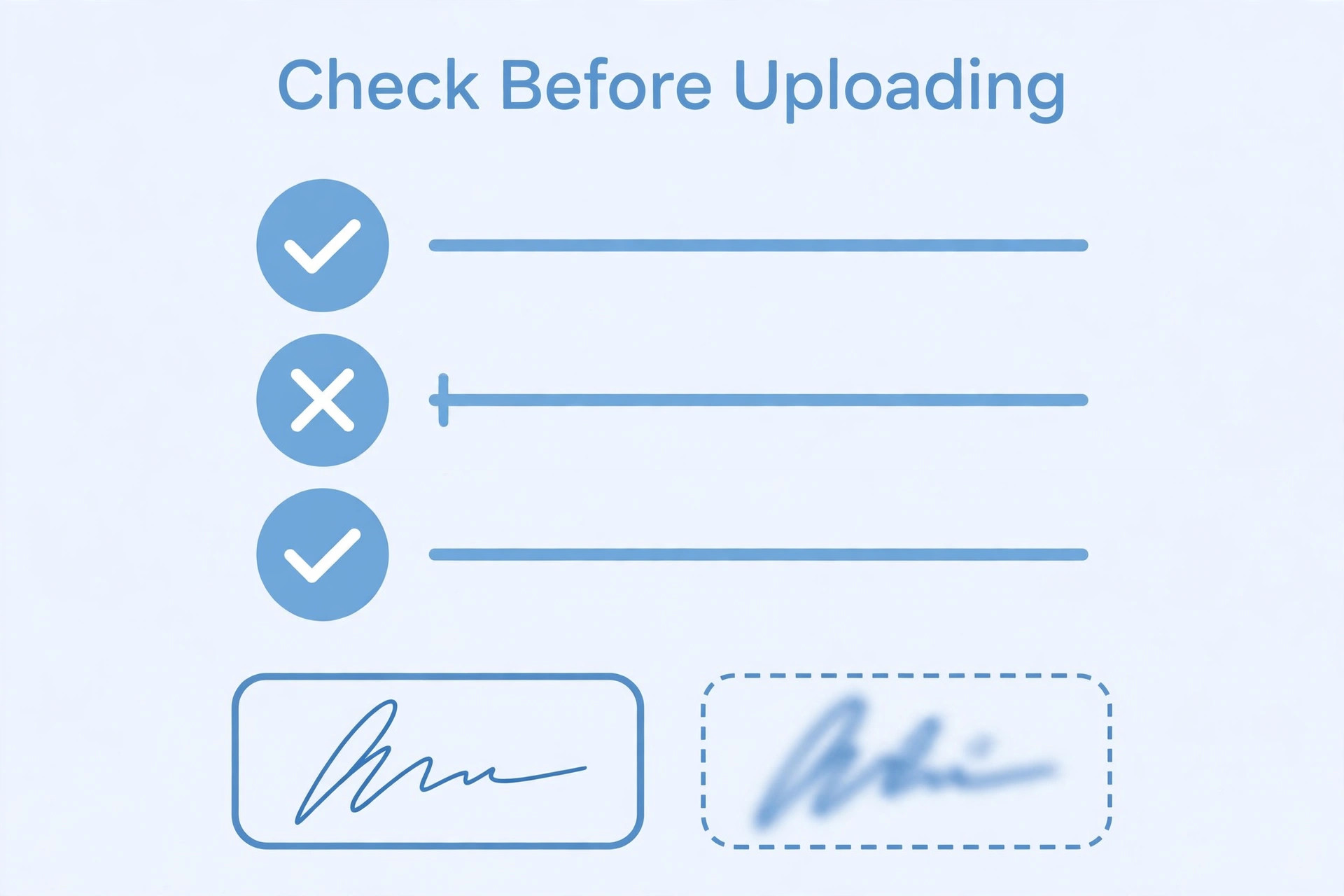
A complete pre-upload checklist
Before submitting, verify that the signature is genuine, the ink follows the notice, the scan is clear, the crop preserves all strokes and the proportions are natural. Check the file format, size and dimensions. Open the final file and compare it with the portal preview.
If the application has already been submitted, check the official correction rules. Do not create duplicate applications unless permitted. Contact the official helpdesk if the uploaded file conflicts with the stated requirement.
Frequently asked questions
Can a wrong signature image always be corrected?
That depends on the recruitment process. Some portals provide a correction window, while others do not permit changes after final submission.
Is a blurry signature automatically rejected?
The outcome depends on the authority's review and technical rules. A clear image is the safest choice.
Can I use a scanned signature from an old form?
Only if it is your genuine signature and the current recruitment permits it. The file must also meet the present technical requirements.
Should I upload a signature with a transparent background?
Follow the format and background instructions. Do not assume that transparency is accepted.
What if the preview looks different from my saved image?
Check whether the portal has resized or cropped the preview. If it looks unclear, review the source file and official instructions before submitting.
Final advice
Most signature upload problems are preventable. Read the current rules, write a genuine signature, scan it clearly, crop carefully and verify the final file. A few minutes of checking can reduce avoidable errors in an important application step.
Additional practical considerations for signature upload errors
A useful way to avoid confusion is to treat signature upload errors as a separate task instead of mixing it with every other part of the application. First identify what the authority is asking for, then prepare the relevant file or information, and finally compare the result with the official instructions. This order matters because editing a file before checking the rules can create extra work. It may also lead to a version that looks correct but does not satisfy the upload field.
For example, imagine that you have prepared the signature preview shown by the application. Before submitting it, pause and review file format, crop, ink clarity and compression. Check whether the information is complete, whether the image or document opens correctly and whether the file still looks clear after the final export. If the portal shows a preview, compare that preview with the saved file. A preview can reveal an incorrect crop, a wrong upload field or a file that has not been processed as expected.
It is also useful to keep a small record of what you have checked. Write down the name of the recruitment, the date you reviewed the notification and the technical requirements that apply to this upload. If the authority later publishes a correction or revised instruction, check whether it changes anything. This is especially important when you apply for more than one post or when a recruitment process remains open for several weeks. Do not rely on a screenshot saved from an earlier application cycle.
When something goes wrong, avoid changing several things at once. Read the error message, identify the property it refers to and make one correction. For example, if the message concerns the file type, verify the actual format before changing dimensions. If it concerns readability, inspect the original capture before compressing it again. A step-by-step approach makes it easier to understand the cause and prevents unnecessary changes to a correct file.
Before you finish, ask yourself these questions: Does the file belong to the correct applicant? Is it the document or image requested in this field? Are all important details visible? Does it follow the current notice? Have you checked the final saved version rather than an earlier draft? These checks are simple, but they are useful because upload mistakes often happen when applicants are in a hurry.
If the instructions appear inconsistent, do not choose whichever value seems easier. Check for a later official notice, a corrigendum, an application help page or a clarification from the recruiting authority. Keep the response or reference number if you contact support. An unofficial blog or social media post can help you understand a topic, but it should not override an official recruitment instruction.
Finally, keep your original records safely. Save the unedited scan or source file separately from the version prepared for upload. This gives you a clean starting point if a correction is required or another portal asks for a different format. Use clear filenames and avoid sharing personal documents through public links. A careful file-management routine makes the application process more organised and reduces the chance of selecting an outdated version.