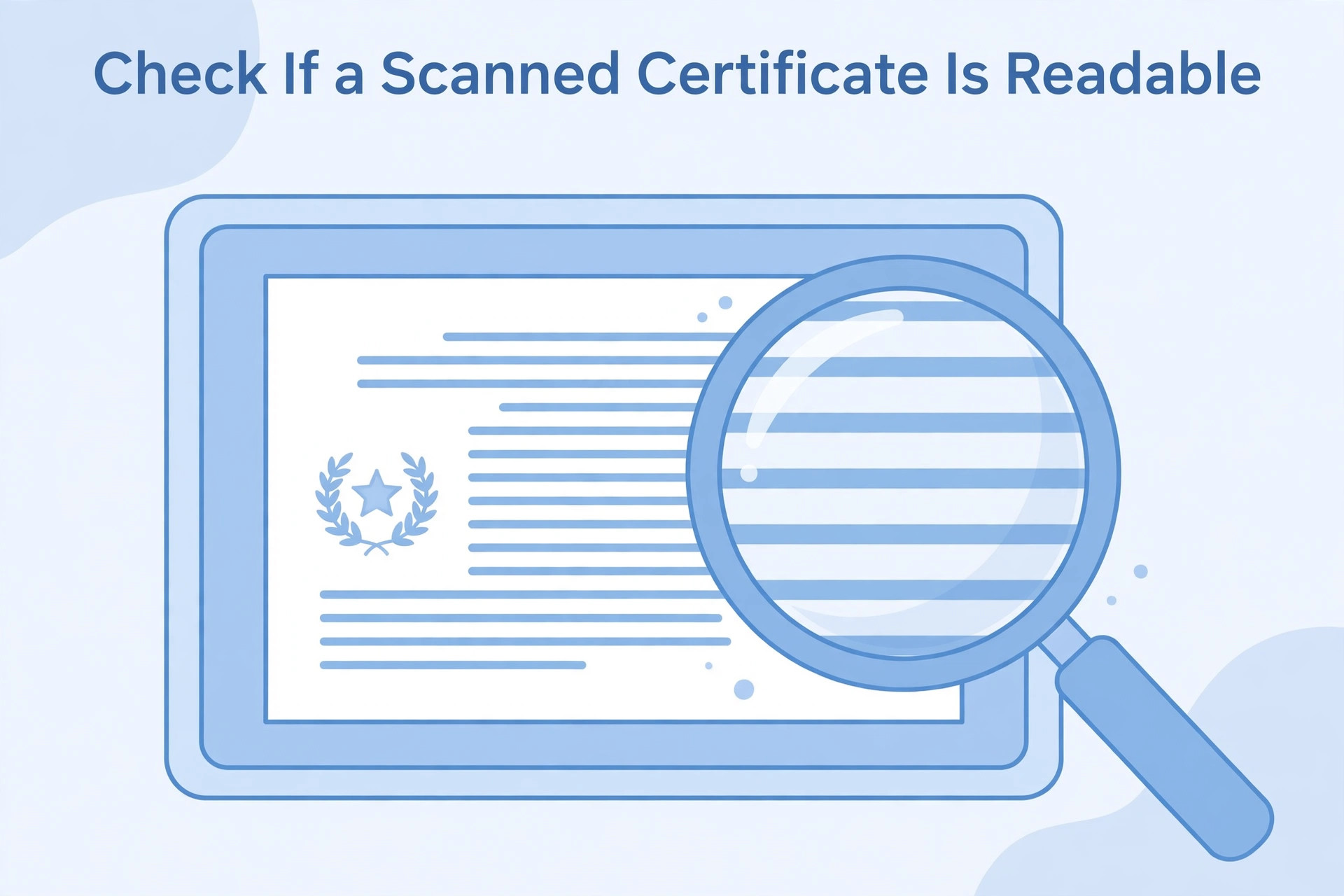
A scanned certificate may look fine when viewed as a small thumbnail but become difficult to read when opened at full size. Names, dates, certificate numbers, stamps and signatures are important during recruitment document verification. If these details are blurred, hidden or cut off, the document may be difficult to review.
Before uploading a certificate, check more than the file size. Make sure the entire document is visible and that every important detail can be read. This guide provides a practical way to inspect a scanned certificate using a phone or computer.
Why readability matters
Recruitment authorities use uploaded documents to check eligibility and verify information provided in the application. A certificate may contain the candidate's name, institution, qualification, issue date, registration number, seal and authorised signature. If any of these details are missing or unclear, the reviewer may need additional information.
A technically valid PDF is not necessarily a readable PDF. The file may open correctly but contain low-resolution scans or pages that are too dark. Visual inspection is therefore important.
Check the complete page
Open the scan and look at all four edges. Confirm that the top heading, bottom details, side text, stamps and page numbers are visible. Automatic cropping can sometimes remove content close to the edge.
If a certificate has information on the reverse side, check whether the recruitment instructions require both sides. Do not leave out an endorsement simply because the front page appears complete.
Inspect names and dates
Zoom in on the candidate's name, date of birth, issue date and other key details. Check whether letters are sharp and whether numbers can be distinguished. A blurred 3 may look like an 8, while a faint letter may disappear into the background.
Compare the scan with the original document. If the scanned text is unclear, create a new scan. Do not try to guess what a blurred number says.
Check certificate and registration numbers
Small reference numbers may be important for verification. Zoom in and confirm that each digit is visible. Look for compression marks, shadows or folds that cover the number.
If the number is printed near an edge, make sure the crop has not cut it off. A new scan may be needed if the original image is incomplete.
Inspect seals and signatures
Official stamps and signatures can appear faint in a scan. Check that the shape and text are visible. If the certificate contains a coloured seal, a colour scan may preserve details that grayscale conversion could remove.
Do not digitally redraw a stamp or signature. If the scan is unclear, scan the original again using better lighting and focus.
Check brightness and contrast
A scan that is too dark may hide text. A scan that is too bright may wash out faint writing or stamps. Look at the page background and printed details together. The page should be clear without losing important information.
Small adjustments may help, but avoid extreme filters. If the document looks unnatural after editing, return to the original and create a better scan.
Look for shadows, glare and folds
Shadows can cover text or create dark bands. Glare can make a section of the page appear blank. Folds may distort letters or hide a line. These problems are best corrected during scanning.
Place the certificate on a flat surface and use even light. Keep the camera parallel to the page. If the document is glossy or laminated, adjust the light angle to reduce reflection.
Check page orientation and order
A certificate should be upright and easy to read. Rotate pages that appear sideways or upside down. If the PDF contains multiple pages, check that they are in the correct order and that no page is missing or duplicated.
Scroll through the entire document rather than checking only the first page. A single rotated or incomplete page can make the file difficult to use.
Check the final file after compression
If you compress the PDF to meet a size limit, inspect it again. Compression can make small text, stamps and signatures less clear. Compare the compressed copy with the original scan.
Do not upload a compressed file simply because it is below the maximum size. It must also remain readable. If quality has dropped too much, use a lighter compression setting or create a better scan.
A practical readability checklist
Before uploading, confirm that the candidate's name, dates, certificate number and issuing details are readable. Check the complete page, seals, signatures and any reverse-side information. Make sure there are no shadows, glare or missing corners. Confirm the page orientation and sequence.
Open the final saved file, not just the scanning application's preview. The file you upload should be the same one you inspected.
Common mistakes
Applicants sometimes check only the thumbnail, ignore the reverse side, compress the PDF too heavily or crop away a small reference number. Others assume that a file is readable because it opens without an error.
Avoid these shortcuts. Zoom in on important details and compare the scan with the original document.
Frequently asked questions
How clear should a scanned certificate be?
It should allow the important text, dates, numbers, stamps and signatures to be read without guessing. Follow any resolution or quality requirements in the portal.
Can I sharpen a blurry certificate?
A small adjustment may improve mild softness, but sharpening cannot restore missing detail. A new scan is better when the original capture is out of focus.
Should I scan certificates in colour?
Use colour when required or when colour details such as seals and photographs matter. Otherwise follow the portal's instructions.
Is a PDF readable if the text cannot be selected?
Yes. A scanned PDF may contain page images rather than searchable text. The important point is that the image is clear and complete.
What if only one page is unclear?
Rescan that page and replace it in the PDF. Then review the complete file again.
Final check before upload
A readable certificate should be complete, upright and clear at normal viewing size. Important details must remain visible after compression and export. Take a few minutes to inspect every page before uploading it to the recruitment portal.
Additional practical considerations for certificate readability
A useful way to avoid confusion is to treat certificate readability as a separate task instead of mixing it with every other part of the application. First identify what the authority is asking for, then prepare the relevant file or information, and finally compare the result with the official instructions. This order matters because editing a file before checking the rules can create extra work. It may also lead to a version that looks correct but does not satisfy the upload field.
For example, imagine that you have prepared the final scanned certificate. Before submitting it, pause and review names, dates, reference numbers, seals and signatures. Check whether the information is complete, whether the image or document opens correctly and whether the file still looks clear after the final export. If the portal shows a preview, compare that preview with the saved file. A preview can reveal an incorrect crop, a wrong upload field or a file that has not been processed as expected.
It is also useful to keep a small record of what you have checked. Write down the name of the recruitment, the date you reviewed the notification and the technical requirements that apply to this upload. If the authority later publishes a correction or revised instruction, check whether it changes anything. This is especially important when you apply for more than one post or when a recruitment process remains open for several weeks. Do not rely on a screenshot saved from an earlier application cycle.
When something goes wrong, avoid changing several things at once. Read the error message, identify the property it refers to and make one correction. For example, if the message concerns the file type, verify the actual format before changing dimensions. If it concerns readability, inspect the original capture before compressing it again. A step-by-step approach makes it easier to understand the cause and prevents unnecessary changes to a correct file.
Before you finish, ask yourself these questions: Does the file belong to the correct applicant? Is it the document or image requested in this field? Are all important details visible? Does it follow the current notice? Have you checked the final saved version rather than an earlier draft? These checks are simple, but they are useful because upload mistakes often happen when applicants are in a hurry.
If the instructions appear inconsistent, do not choose whichever value seems easier. Check for a later official notice, a corrigendum, an application help page or a clarification from the recruiting authority. Keep the response or reference number if you contact support. An unofficial blog or social media post can help you understand a topic, but it should not override an official recruitment instruction.
Finally, keep your original records safely. Save the unedited scan or source file separately from the version prepared for upload. This gives you a clean starting point if a correction is required or another portal asks for a different format. Use clear filenames and avoid sharing personal documents through public links. A careful file-management routine makes the application process more organised and reduces the chance of selecting an outdated version.